Why Framer Will Win the AI Site-Building Race
Ryan Hayward
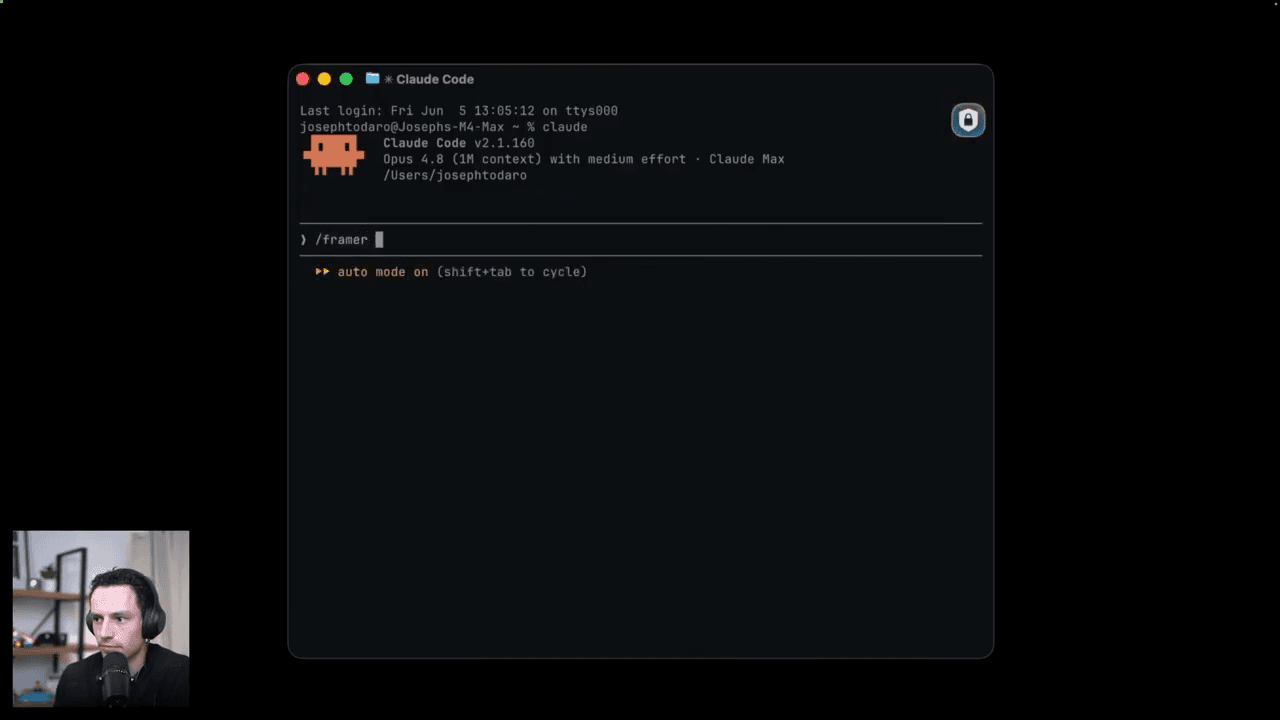
Every AI tool that's trying to build websites for you has the same problem.
The output looks good for 30 seconds. Then you try to edit it, change the layout, adjust the copy, or connect it to real content - and it falls apart. You're left with something that looks like a website but can't be worked with like one.
Framer has always had an unfair advantage for this exact reason.
The context problem
Every other AI site builder starts from zero every time. You describe what you want, it generates something generic, you fight it into shape. The AI has no idea what your brand looks like, what components you've built, or what design decisions you've already made. It's guessing.
Framer is different because the AI isn't building in a vacuum. It's building inside your actual project. It knows your color styles. It knows your text hierarchy. It knows the components you've built, the spacing rules you've established, the layout patterns you've used across every page.
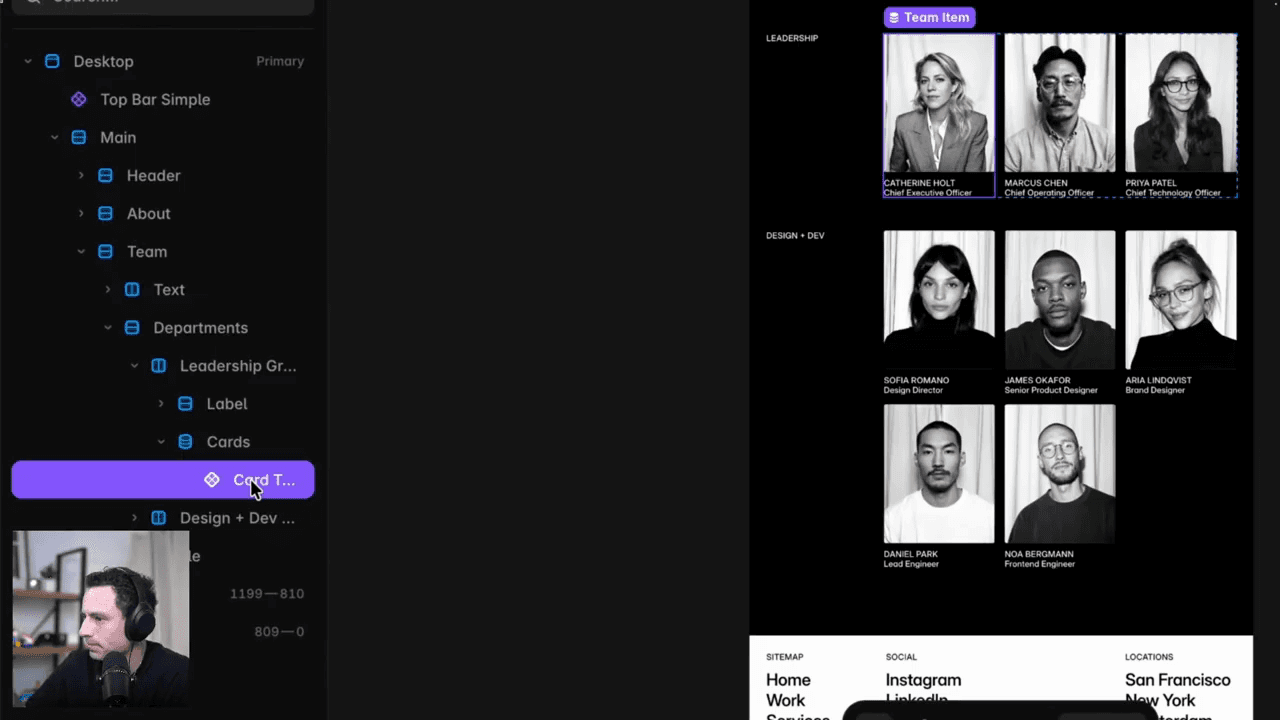
When you ask the canvas agent to add a new section, it doesn't invent one from scratch. It generates something that looks like your site. Same spacing. Same typography. Same visual language. And if it gets something wrong, you can edit it directly, in the same canvas, with the same tools you already know.
That's the context advantage. And no other AI website tool has it.
The editability advantage
The other thing that separates Framer 3.0 from every AI-first website builder I've seen is what happens after the AI does its job.
In most AI builders, the output is the output. You might be able to tweak text, swap colors, maybe drag things around a bit. But deep structural changes require starting over or fighting the AI's own opinionated structure.
In Framer, everything the agent creates is just Framer. Editable frames, components, styles. You can grab any element and change it exactly the same way you would have designed it yourself. There's no locked wrapper to break through. No proprietary output format to work around.
This matters because real websites need iteration. Clients change their minds. Brands evolve. Content gets updated. A website that can only be maintained by the AI that built it isn't actually useful.
What I'm watching for
The Framer marketplace is going to get interesting.

When AI can generate templates quickly, the supply of templates goes up fast. That's good for buyers, harder for sellers who are competing on surface-level visual appeal. The creators who'll stand out are the ones with real systems knowledge - who understand Framer's architecture deeply enough to build things that are genuinely well-made underneath the surface, not just good-looking in a preview.
I think the same logic applies to Framer as a career skill. AI makes it faster to build a bad Framer site. It doesn't make it easier to build a good one. The judgment layer - knowing what to ask for, reviewing the output critically, knowing when to step in and edit directly - still requires someone who understands Framer at a deep level.
That's actually an argument for investing in Framer education right now, not against it. The baseline for what a Framer developer can ship just went up dramatically. The people who understand both the tool and the AI will move faster than anyone.
The summary
Framer 3.0 isn't just Framer but with AI. It's a genuinely different way of building websites, where design, content, structure, and AI are all working together inside the same canvas.
The tools that will win the AI site-building race aren't the ones that generate the flashiest demos. They're the ones where the output is actually usable, editable, and maintainable in the real world.
Framer is the only tool I've seen so far that clears that bar.
Keep reading

Framer vs Figma Sites: Which Should You Use?
An honest, unbiased comparison of Framer and Figma Sites across design, collaboration, publishing and scaling.
Mar 10, 2026
How to Optimise Your Framer Site for SEO
A practical crash course on getting your Framer site found, covering site settings, page-level SEO, headings, alt text and performance.
Feb 26, 2026
5 Hard Truths About Learning Framer
After teaching thousands of designers Framer, here are the five mistakes I see on repeat, and how to avoid them.
May 21, 2026